Chapter 30 · In practice
Part 5 · The app at work31 of 35
Tracking income, spending and personal debts so the month adds up
Late in September, with the salary not due until the 28th, Dee's budgets look either fine or impossible depending on what you measure them against. Here is how The Margin measures, and how two debts with two friends get settled.
Rabee Hanzla, founder3 min read
The short version
- Budgets are measured against a normal month of income, worked out from recurring income, not against whatever has landed so far.
- A debt with someone on The Margin is a claim they confirm or dispute, and it is settled only when both sides say so.
- With someone who is not on The Margin, you send a plain-text statement instead. Nothing here moves money.
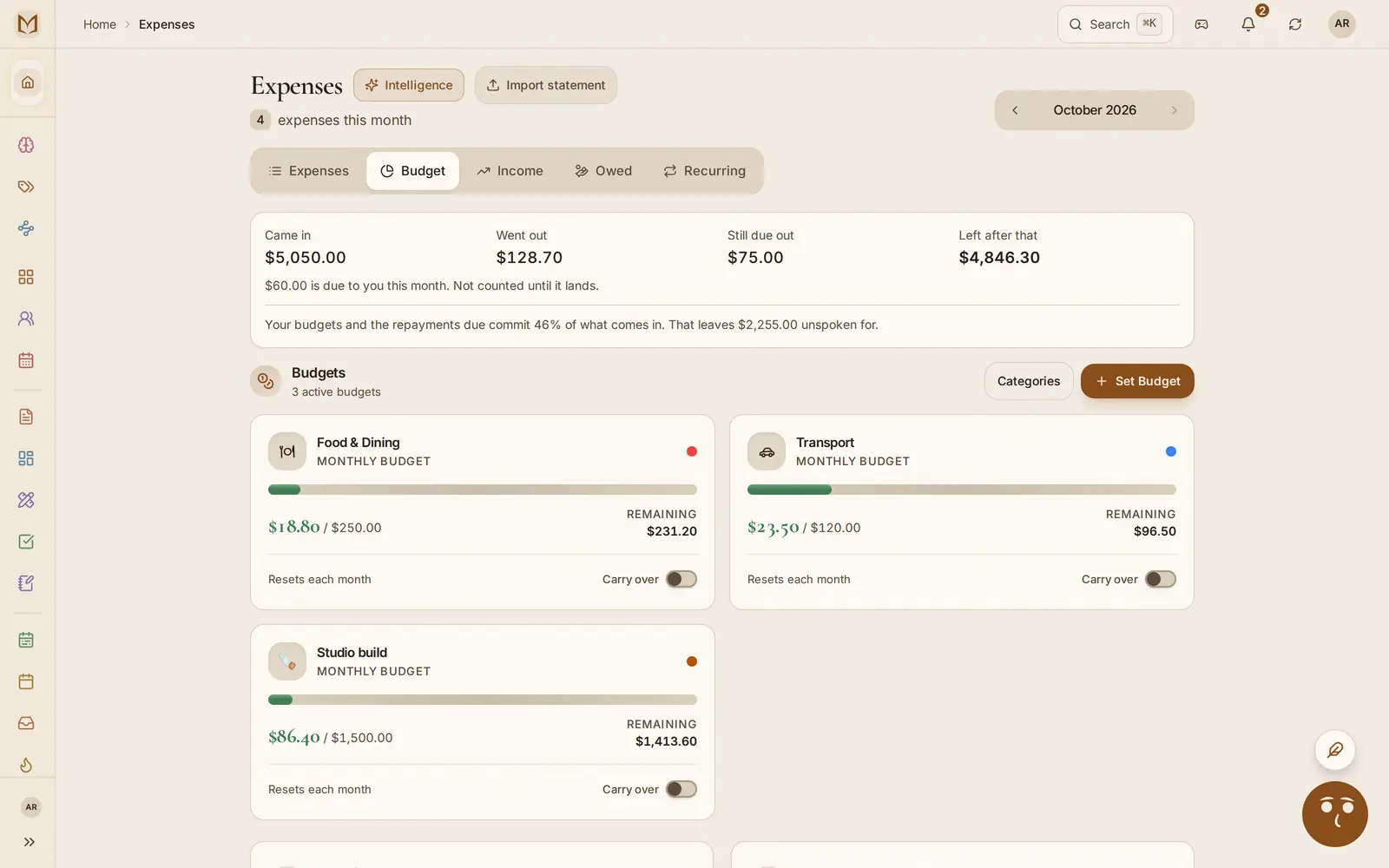
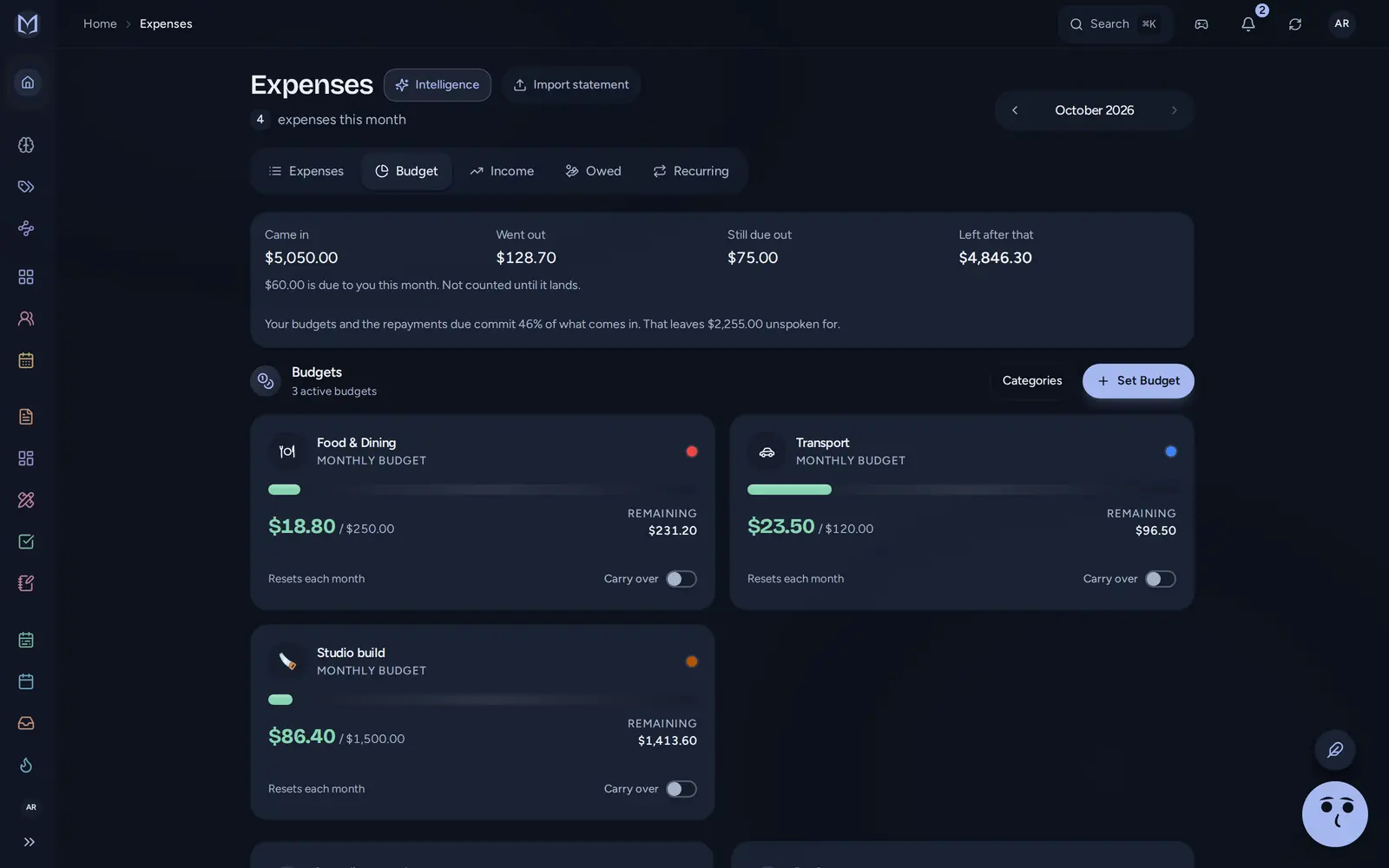
Sunday, Sep 27. Dee Okafor opens Expenses to answer the usual question late in a month: is this fine?
Four numbers sit at the top of the Budget tab.
Dee's September, as of the 27th
$850.00
$612.40
$75.00
$162.60
That looks thin. Dee's salary, $4,200 a month, is paid on the 28th, so almost nothing has come in yet. The line under the figures puts it in proportion:
Your budgets and the repayments due commit 26% of what comes in. That leaves $3,125.00 not yet planned.
What "what comes in" means#
Dee has three monthly budgets: groceries $650, transport $120, eating out $230. With the $75 due on the 30th, that is $1,075 promised this month.
The 26% is measured against a normal month, worked out from recurring income: the salary, entered once with This repeats ticked. That gives $4,200.
Measured against what has actually landed, $850, the same budgets would read 126%, "more than the month brings", in a warning color for most of every month. We put this arithmetic in one place, so the Budget tab, the phone and the app's built-in AI, Margin Intelligence, all give the same answer.
With no income entered at all, the card shows no percentage and asks for income instead. Money other people owe Dee is shown beside the picture, but not counted until it arrives.
How the salary gets there#
Dee doesn't retype the salary each month. On the 28th the app adds September's salary to Dee's income by itself and sends a notification. If it runs twice, the second run finds the payday already there and adds nothing.
When a job ends, Dee deletes the repeating income. Past months keep their numbers.
Two debts, two paths#
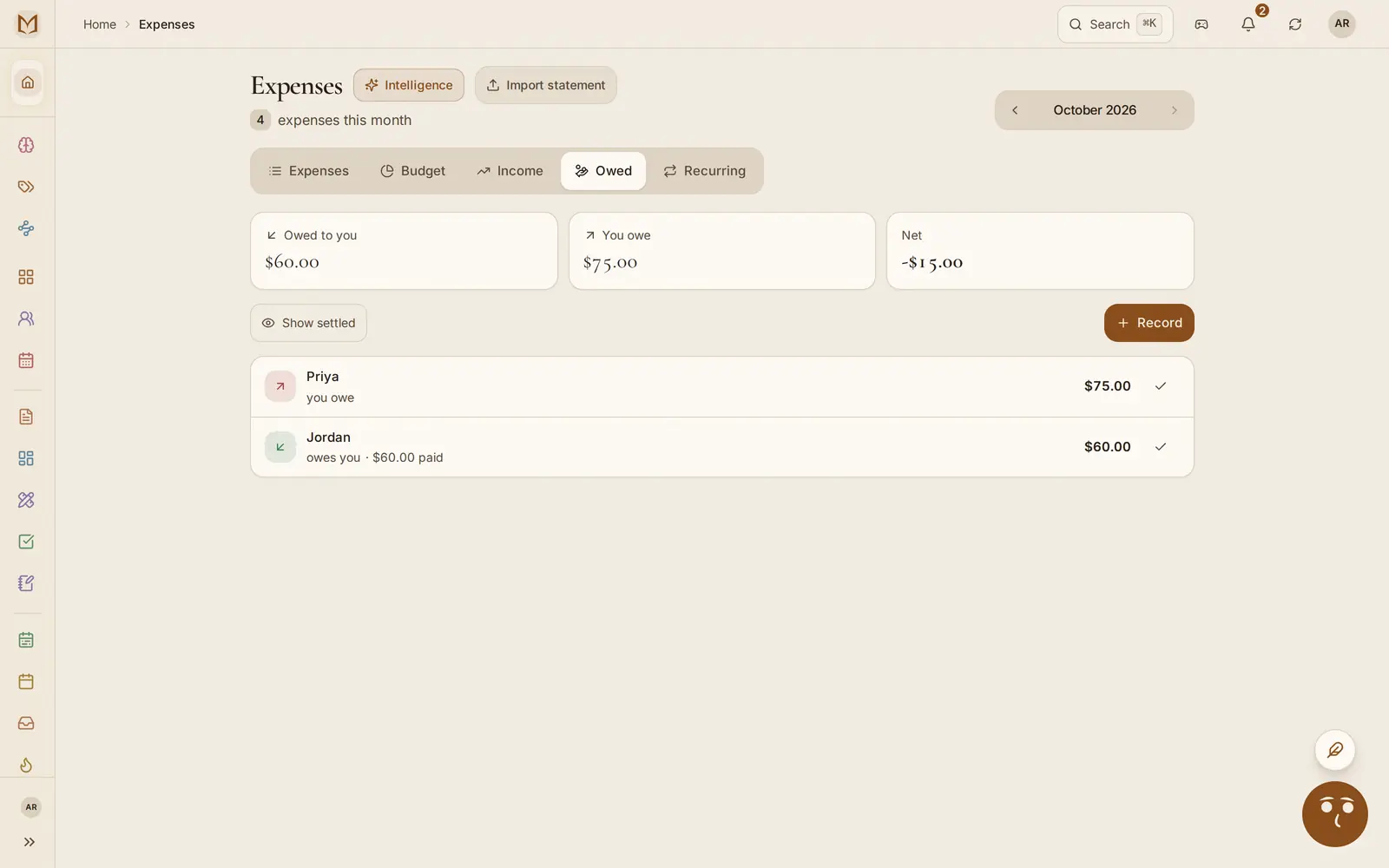
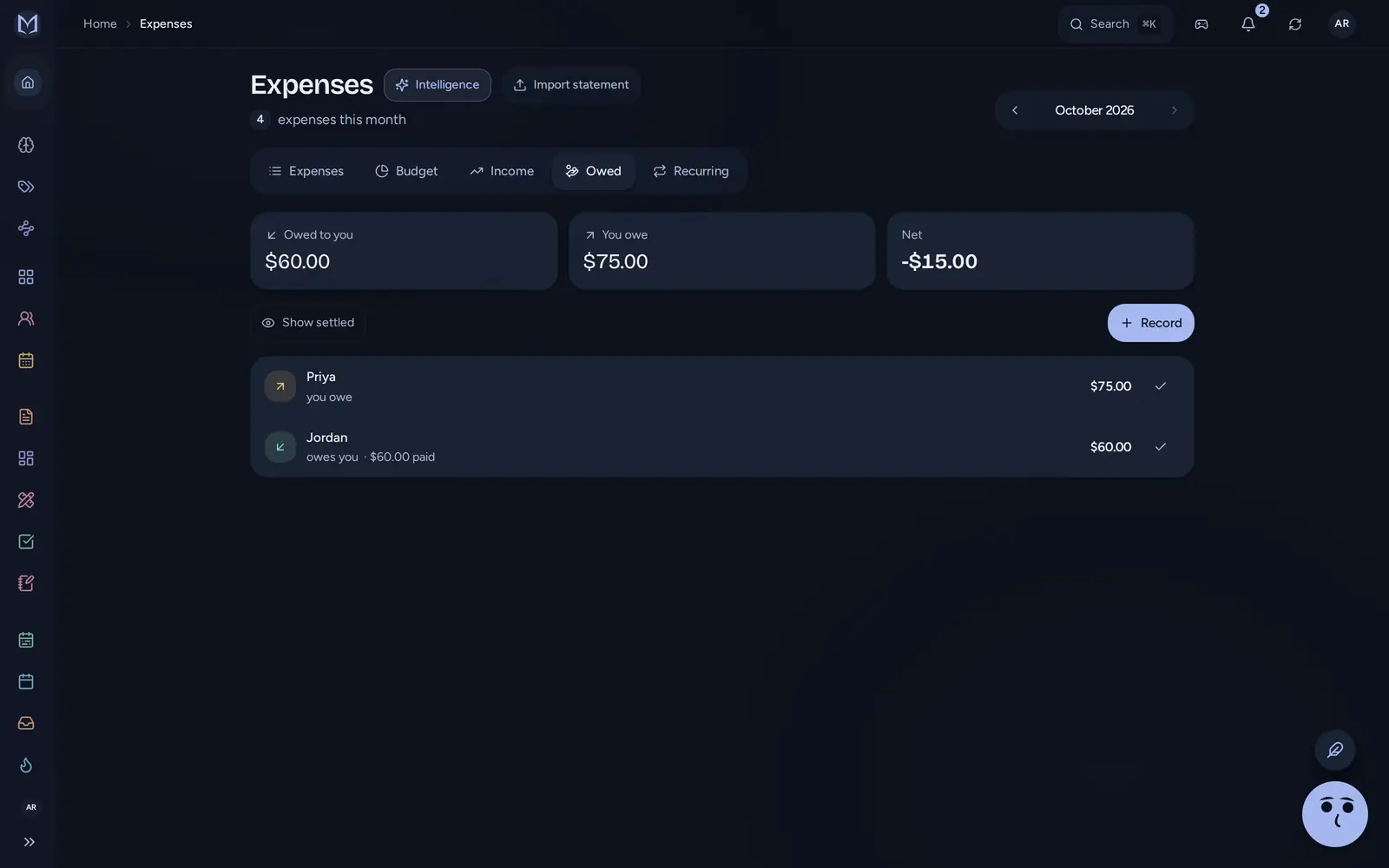
The Owed tab holds money lent or borrowed, either way. Dee has two open.
Dee owes Priya $75, a share of a cabin deposit for a spring trip, due Wednesday, Sep 30. Priya is on The Margin and is one of Dee's connections. A record can only be sent to a connection or someone who shares a workspace with you, so a guessed email address never puts a claim about money in front of a stranger.
What happens with Priya's $75
- Dee sends the record. Priya sees what Dee wrote down.
- Priya answers That is right. She could have pressed I disagree with a reason, and Dee could have sent it again, as many times as it took.
- On Sunday, three days before it is due, Dee gets a reminder, and Priya gets one from her side.
- Dee pays Priya from a banking app, then presses Record payment.
- Dee says This is paid off. Priya confirms. Only then is it settled.
Once the payment is recorded, "Still due out" on the Budget tab drops to nothing.
Jordan owes Dee $120 for a bike repair, paid back in two halves. The first $60 came on Sep 19. Jordan is not on The Margin, like most people you lend to. So this one is Dee's own record.
Expenses, income and debts are on every plan, Free included. The Budget tab with the 26% line is on the paid plans.
What Dee sends Jordan#
Copy statement on Jordan's record gives a plain account to paste into a message. Jordan needs no account to read it. This is what Dee sent:
RECORD OF MONEY OWED

Jordan owes Dee Okafor

Amount agreed: USD 120.00
Recorded on:   September 7, 2026
Due by:        October 7, 2026
What for:      Bike repair. Paying it back in two payments.

PAYMENTS (1)
  September 19, 2026, paid USD 60.00, by bank (First half)

Total paid:    USD 60.00
Outstanding:   USD 60.00

As of September 27, 2026.
This is one person's record, kept in The Margin, shared so both sides can check it against their own.